Ceilings for the Car Process
The craft moves overhead: a Spielberg film run like a live show, a London ceiling built for windscreen reflections, opera supertitles turned into scenery, and Keith Sonnier's first neon.
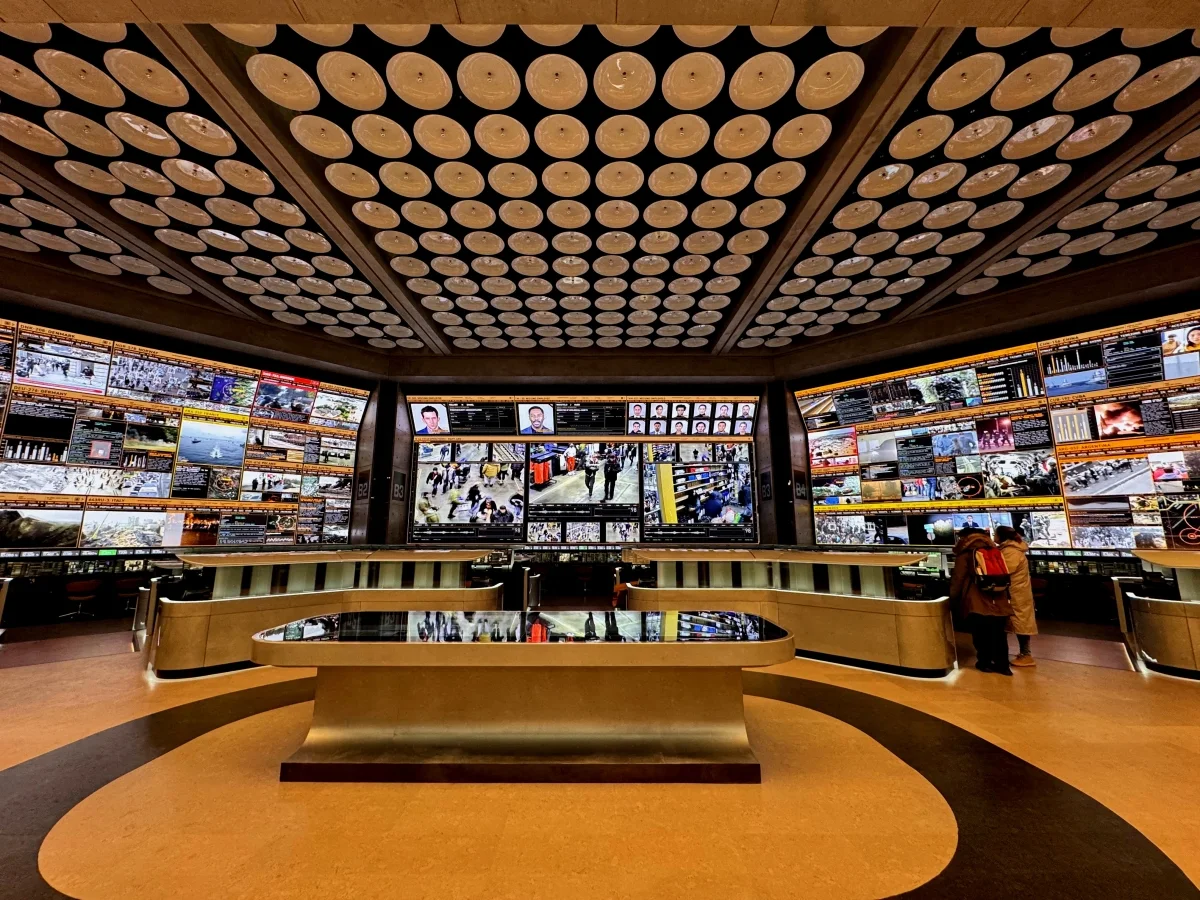
In a car process shot the car never moves. The world moves around it, and the camera only believes it if the glass does too: every windscreen, wing mirror and strip of chrome is a mirror pointed at the ceiling. This week two stages built for exactly that. For Steven Spielberg's Disclosure Day, 4Wall hung a 24-foot-square LED ceiling over a car process volume roughly 132 feet long, one of three LED environments it built for the film. In London, Garden Studios has flown a 10m by 5m high-resolution Absen ceiling that travels and tilts, because, as its CTO puts it, large pixel-pitch ceilings fall short when they're used for windscreen reflections.
The Ceiling Is a Light
Nobody watches the ceiling on a car process stage. It isn't there to be seen. It's a light source: it wraps the actor's face in the colour of the street and lays the city across the glass. The audience only ever sees what it does, never the thing itself. That is lighting at its purest, and it's why we think these two stages are the most interesting LED story of the week. Lighting is editorial control: deciding what the audience sees, when they see it and how it makes them feel. A good car-stage ceiling makes that decision thousands of times a second and then disappears.
Garden Studios names the problem plainly. Large pixel-pitch ceilings fall short for windscreen reflections, so it built a high-resolution one, on a rig that travels and tilts up to become a front wall. We hold the same line on our own shows. We won't put up a low-resolution wall because it's cheaper; if the budget can't carry the right pitch, we change the approach, not the quality. A reflection is the least forgiving place to cut that corner, because the camera is focused on it.
Then read the release the way a studio reads a budget. Garden kept the Tessera S8 processors it bought five years ago running the main wall, and bought a new SX40 only for the ceiling. The reason, according to Brompton's Patrick Goodden, is cable: the ceiling rides a track from horizontal to vertical, the S8 needs a thick loom out of the back, and the SX40 needs one or two fibres. The processor was chosen by the cable run. Anyone who has dressed a moving truss knows that feeling. This is the backbone we love, the processors, fibre and data paths nobody in the audience will ever see. Good engineering isn't the newest box on every line; it's spending exactly where the rig demands it.
Disclosure Day adds the part that belongs to our world. The Wardex walls were a surveillance multiviewer that the characters work in real time, so, in 4Wall's words, pre-rendered animation was not an option. The team never had fewer than two programmers on set: one ran playback and changes for the current setup while the other built light cards for the gaffer and programmed ahead. Each scene in the script became a track in Disguise and each beat a section. That's a show call. The instincts we use on concerts and live events are now how a Spielberg feature gets lit.
Zachary Sager, who managed the 4Wall project, said "the screens were the hero." We'd go one step further. On a car stage the hero is the light, and the best of it is the light nobody notices: a face behind a windscreen, a city sliding across the glass, and a whole audience believing the car is moving. The idea we're taking back to our own shows: every piece of glass, chrome and gloss on a set is a lighting position. Light it on purpose.
4Wall — Steven Spielberg's Disclosure Day
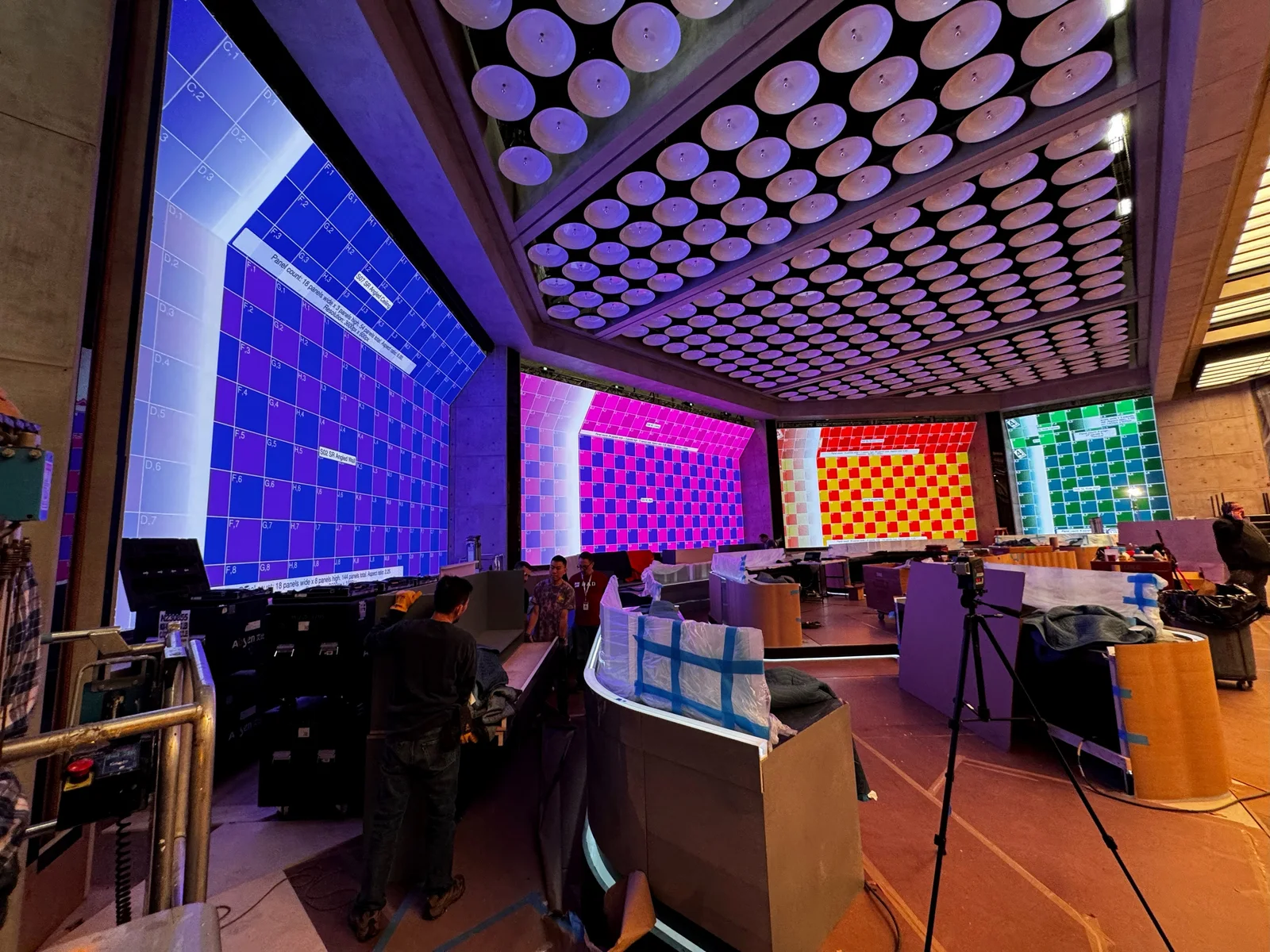
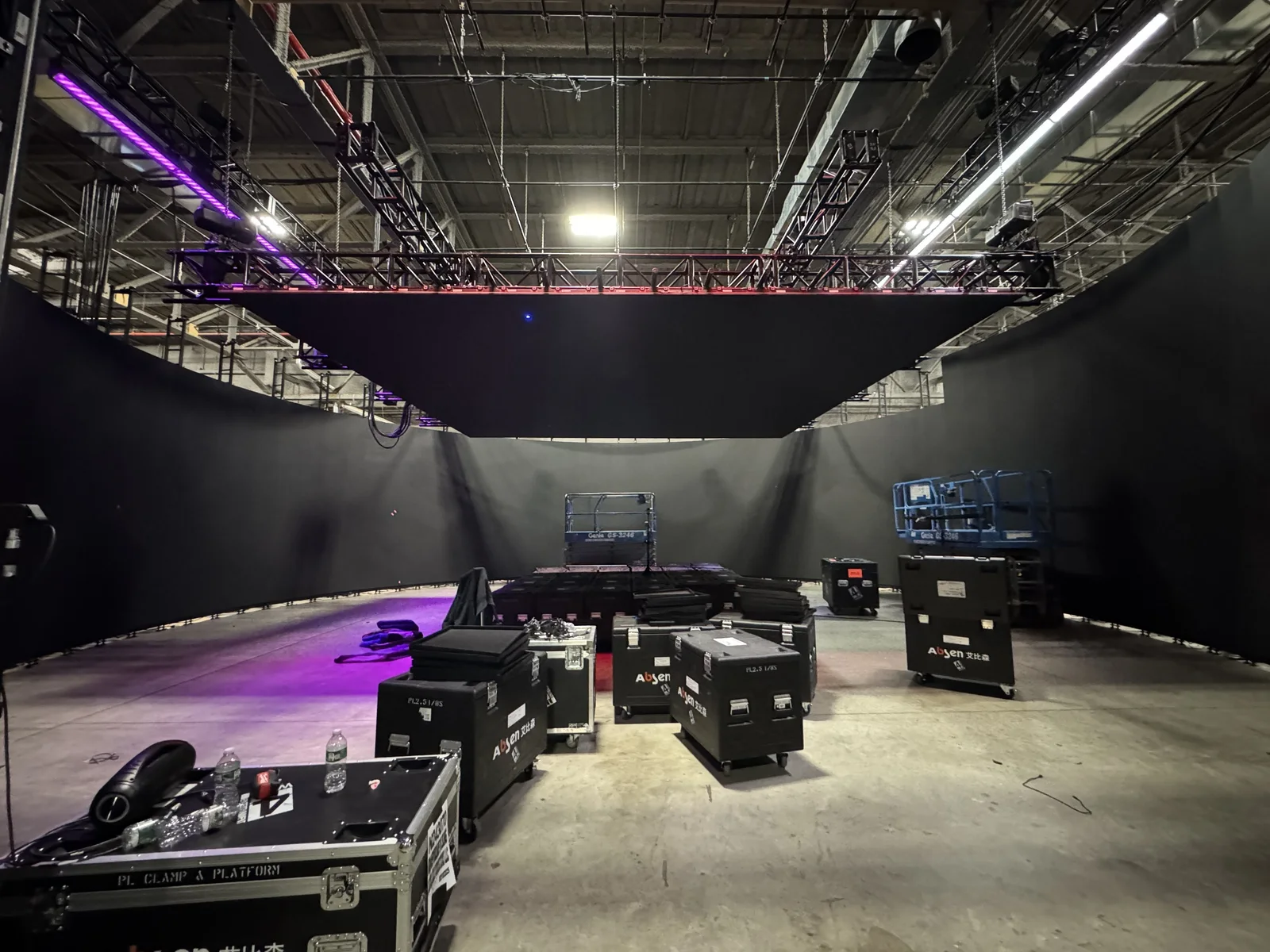
Three LED environments for one film: the News Room, the Wardex command centre and a 360° LED car process. Mathew Leland and Ben Danielowski, VPs of Special Projects at 4Wall, led the build. Eve Roth, 4Wall's Virtual Production Supervisor, ran point with the art department and camera teams; Zachary Sager and Xander Taylor programmed. Wardex, designed by production designer Adam Stockhausen and built at Steiner Studios in the Brooklyn Navy Yard, wrapped the room in ten LED surfaces: five walls, including a centre wall nearly 40 feet wide and more than 13 feet tall in Absen PL2.5 Pro, and five matching ceiling sections, driven by ten Brompton Tessera SX40s and four Disguise VX 4+ servers. The car process volume measured about 132 by 16 feet at 16,200 by 2,000 pixels, under a 24-foot-square ceiling at 3,000 by 3,000, playing 16K stitched spherical plates that Plate Pros assembled from nine-camera arrays, shot on Sony Venice 2. A core team of three worked for about four months; by the end the crew had grown to more than ten.
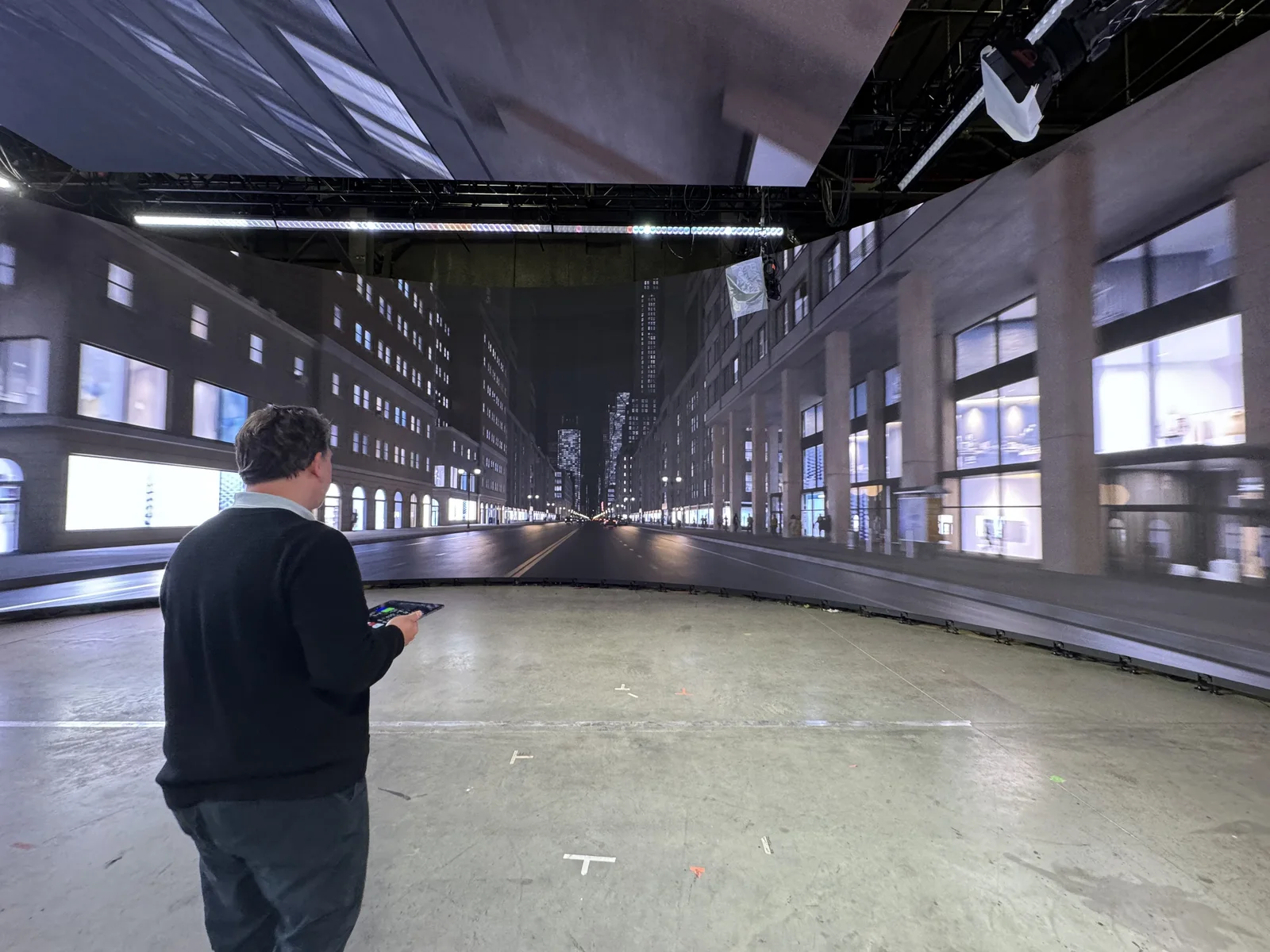
Sager says the team learned to treat the wall as a device to deliver exposition rather than simply an extension of the scenic work. That's the shift. Once the screen carries the story, it needs a playback operator and a show caller as much as a scenic painter.
Garden Studios — a ceiling built for windscreens
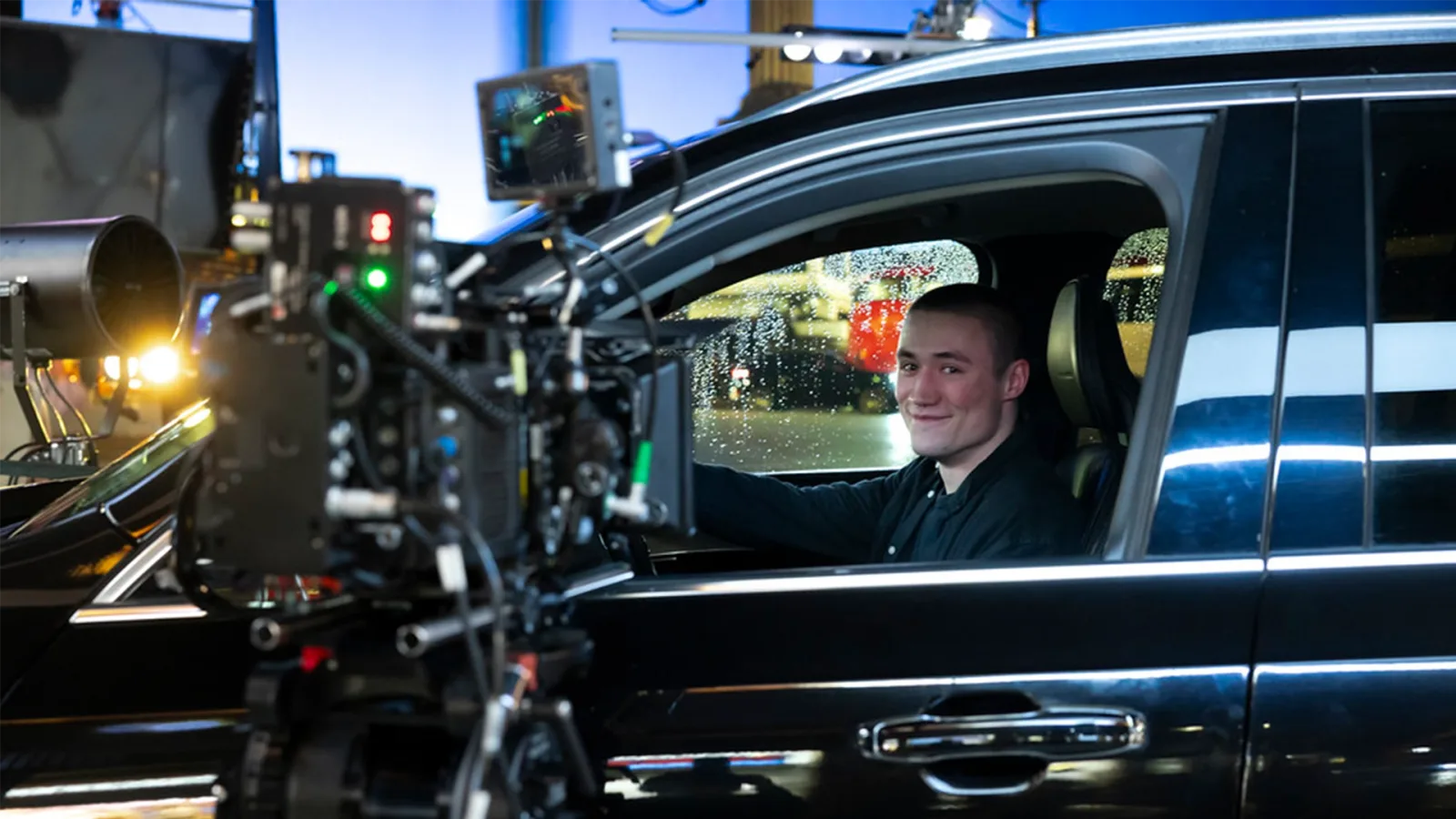
Photo: Jasmin Shah & Garden Studios 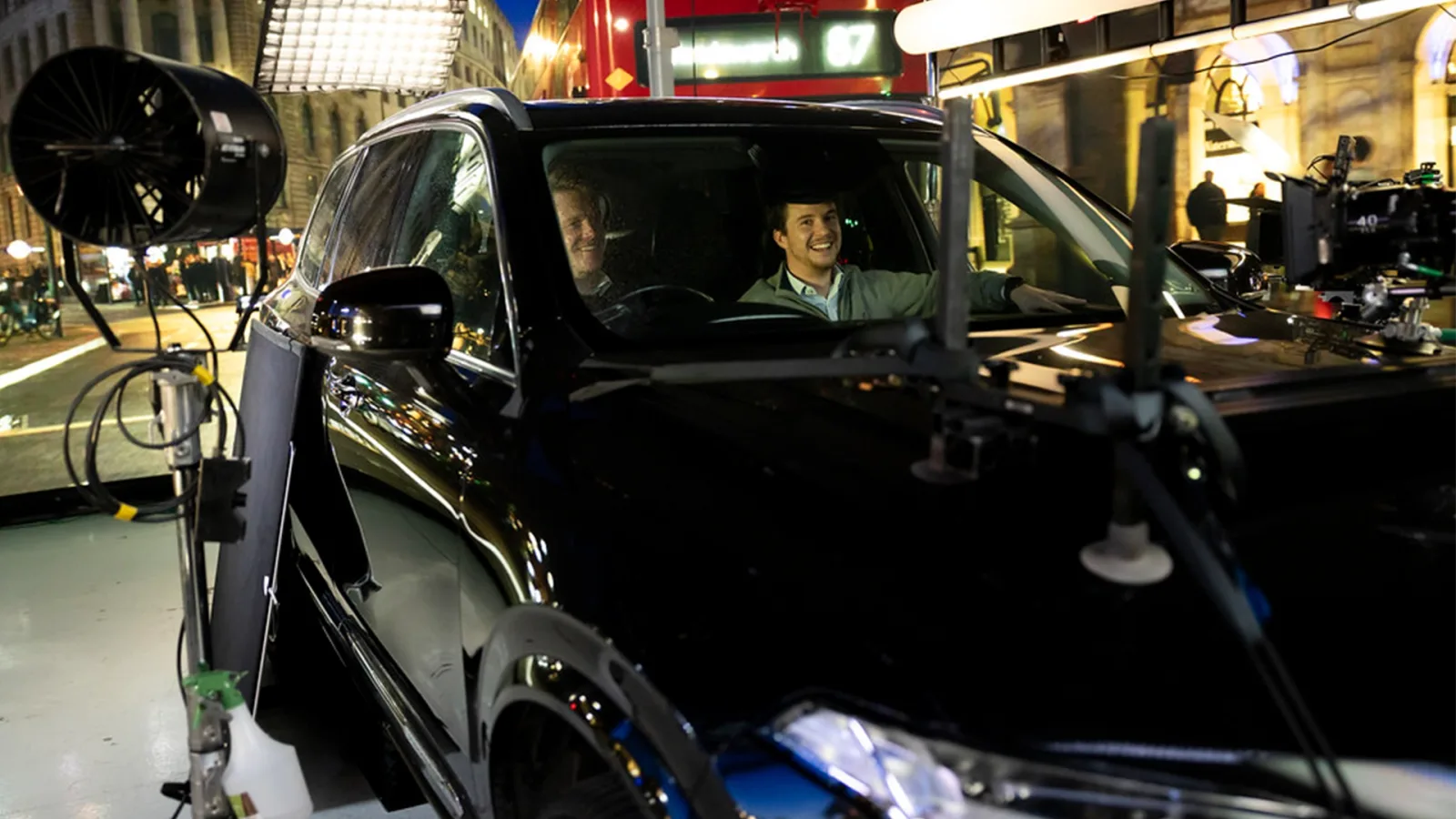
Photo: Jasmin Shah & Garden Studios 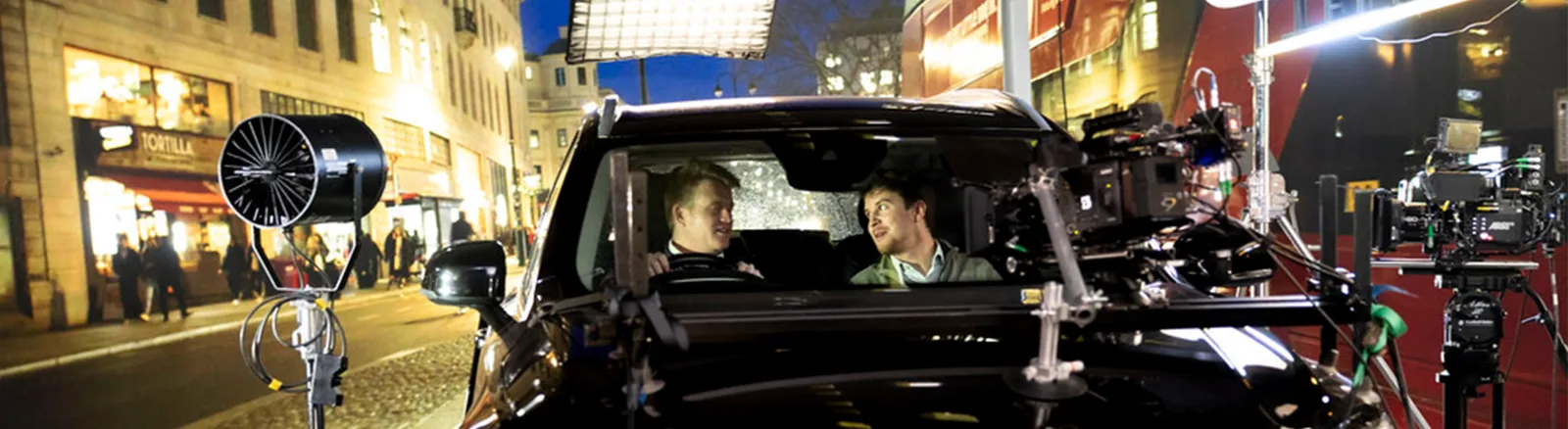
Photo: Jasmin Shah & Garden Studios
A new stage purpose-built for driving and simulated travel: a 24m by 5m ground-stacked curved ROE wall and a 10m by 5m high-resolution Absen ceiling, on a custom rig developed with Cirrolite. Rich Phillips, CTO at Garden Studios, names the limitation of large pixel-pitch LED ceilings when used for windscreen reflections; the new ceiling is meant to capture in-focus reflections directly in camera. It has four degrees of movement and runs at 10-bit, 50Hz on a Tessera SX40 with XD units over TAC fibre. The studio's own page says it tilts up to 90 degrees to work as a front wall. Brompton says it travels up to 20 metres front to back; Garden's page says 18. The Tessera S8s from the studio's first volume, which opened in 2021, drive the main wall.
Reusing five-year-old processors on a brand-new stage is the unglamorous story worth copying. Free software updates kept the S8s current, so the only new spend went where the rig physically demanded it.
MASARY Studios — supertitles as scenery at Boston Lyric Opera
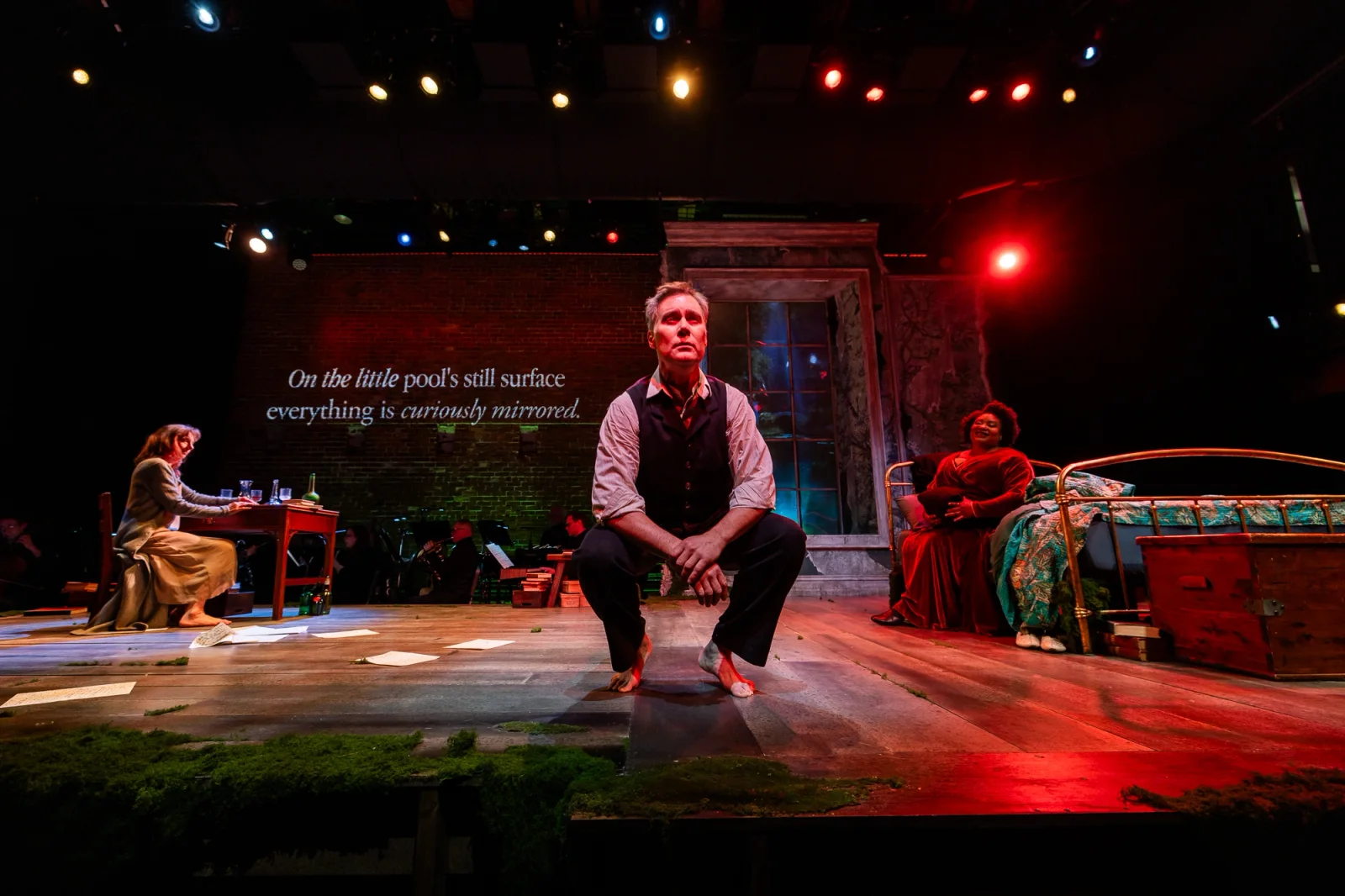
Photo by Nile Hawver/Nile Scott Studios 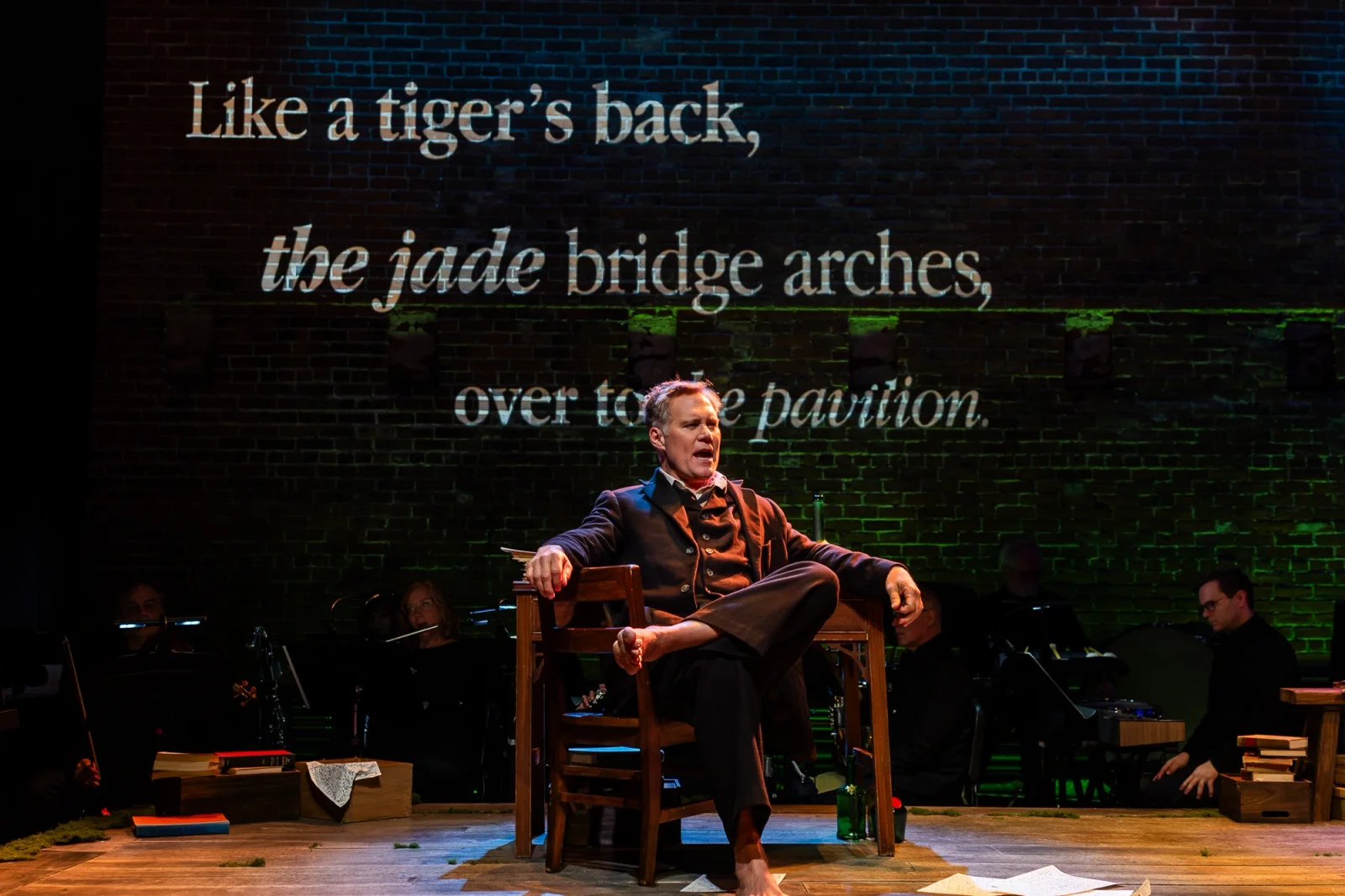
Photo by Nile Hawver/Nile Scott Studios 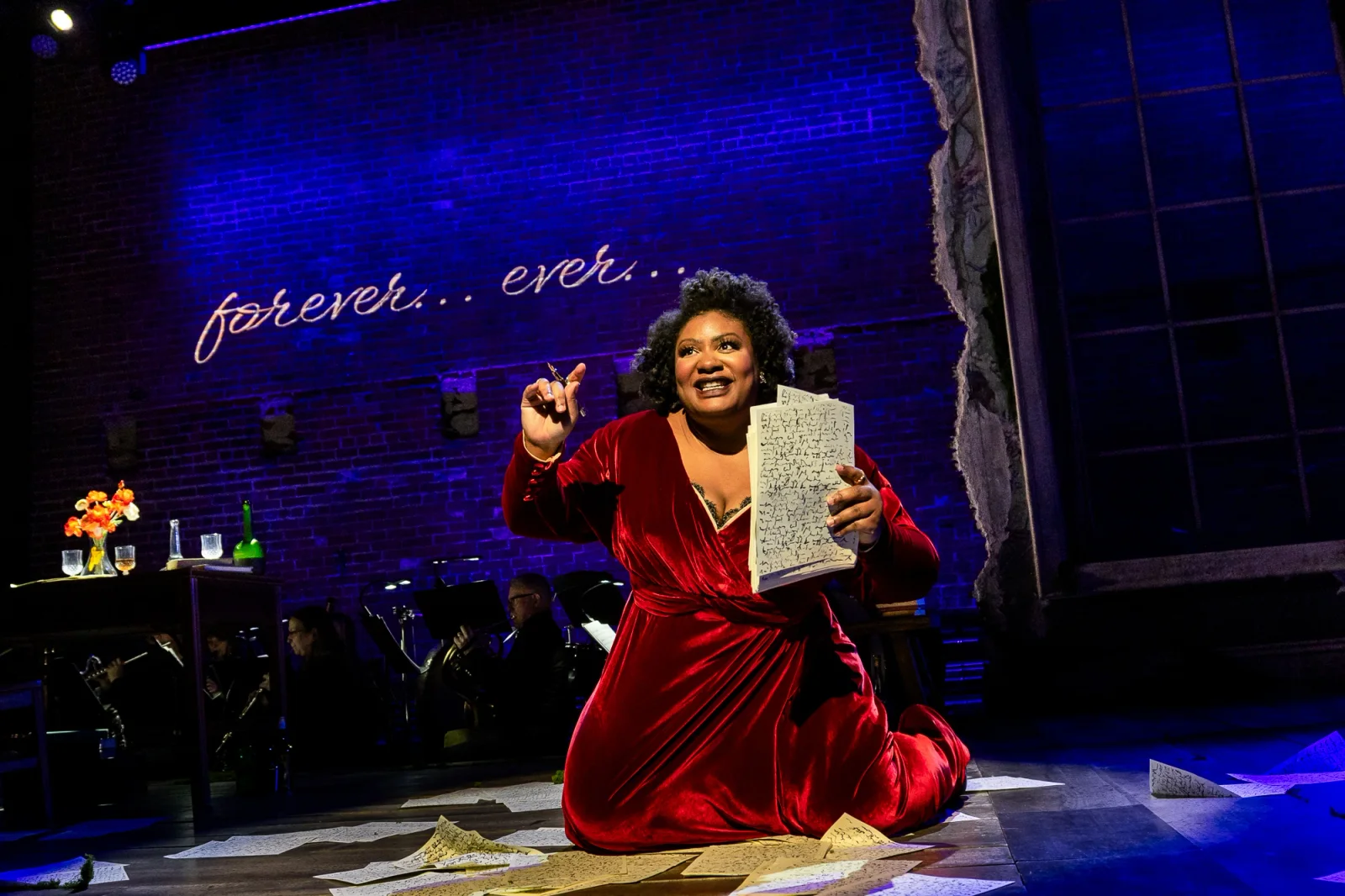
Photo by Nile Hawver/Nile Scott Studios 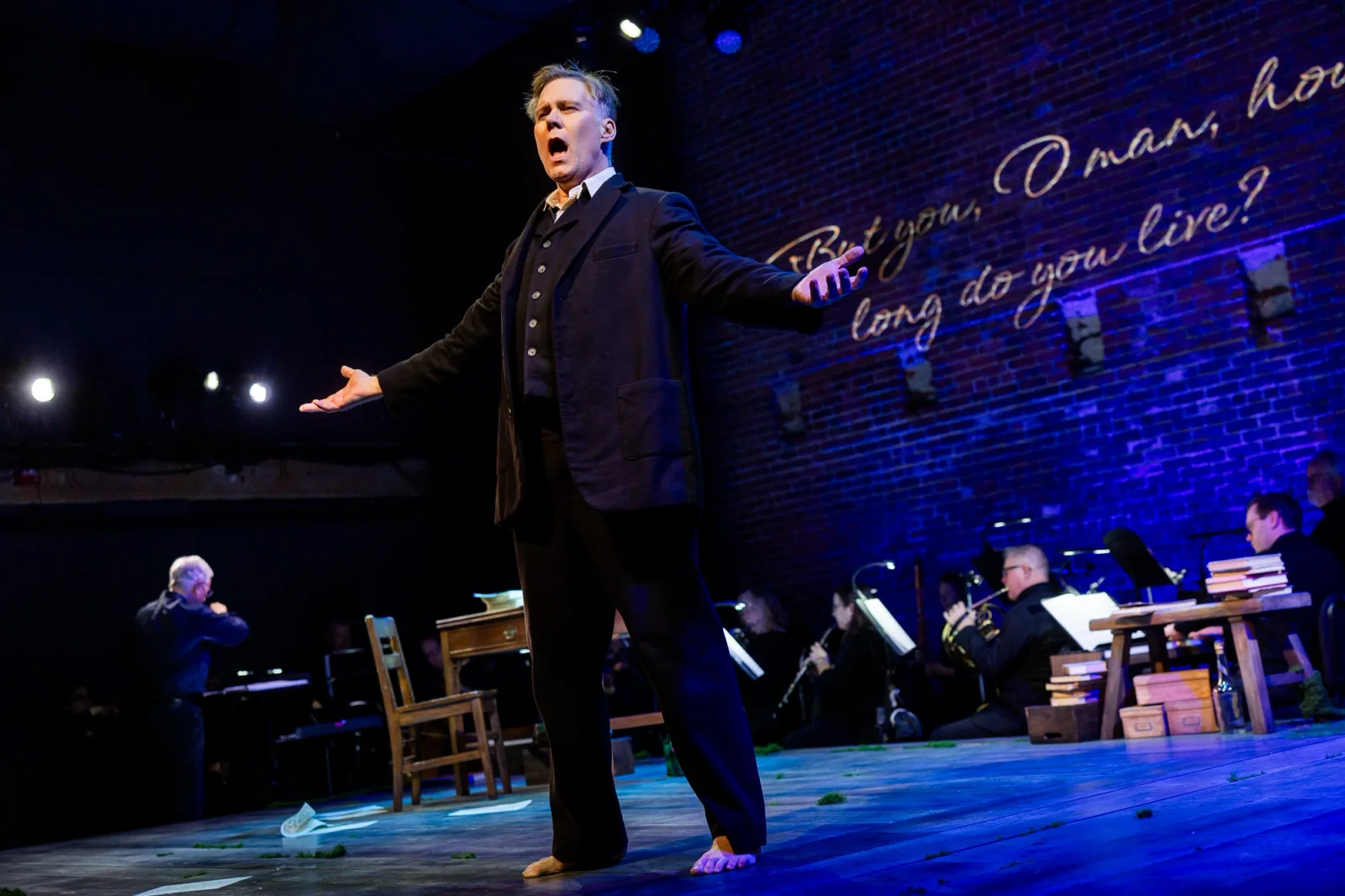
Photo by Nile Hawver/Nile Scott Studios
Boston Lyric Opera's Song of the Earth (Das Lied von der Erde), Mahler in Arnold Schoenberg's chamber arrangement, ran six performances between 20 and 29 March in a 250-seat setting at 15 Channel Center St. Epson told the story on 16 September. MASARY Studios, credited by BLO with projection and pre-show design, turned the supertitles into scenery, with type styled and paced to each passage and moving in time with the singing. Two Epson large venue 4K 3-chip 3LCD laser projectors, converged into a single image, carried the words across Sara Brown's set; a third, an EB-PQ2010W on an ultra short throw snorkel lens, rear-projected a window built into it. Anne Bogart directed; Brian H Scott lit. When an HVAC unit that wasn't in the drawings blocked the planned projector position, says MASARY co-founder Sam Okerstrom-Lang, "we quickly re-rigged the system, swapped the lensing, and adjusted the image without compromising the design."
Supertitles are usually a house utility, handled away from the stage. Handing them to the projection designer is a small idea with a long reach. Every opera house and every multilingual show has the same box to fill.
via Epson ↗
Scheinwurf GmbH — motorised flying for a small German venue
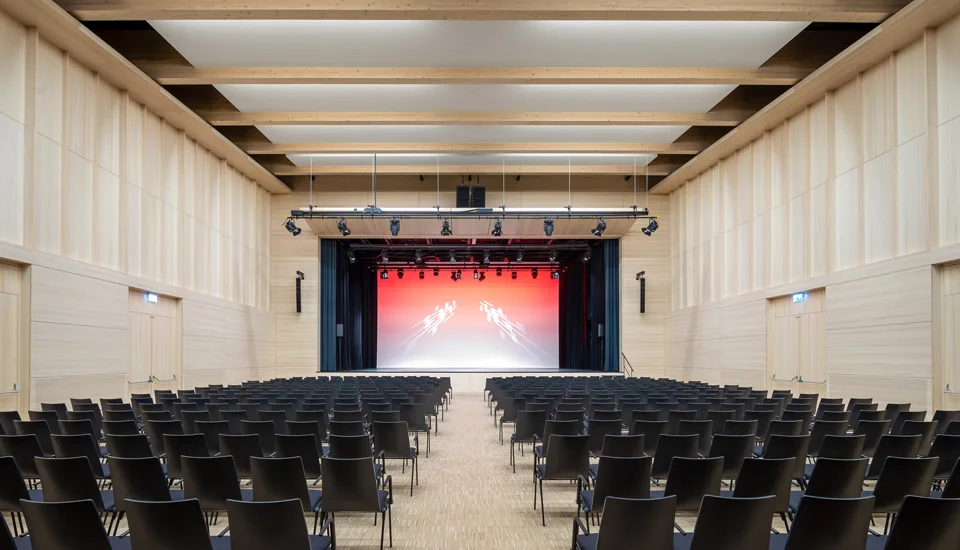
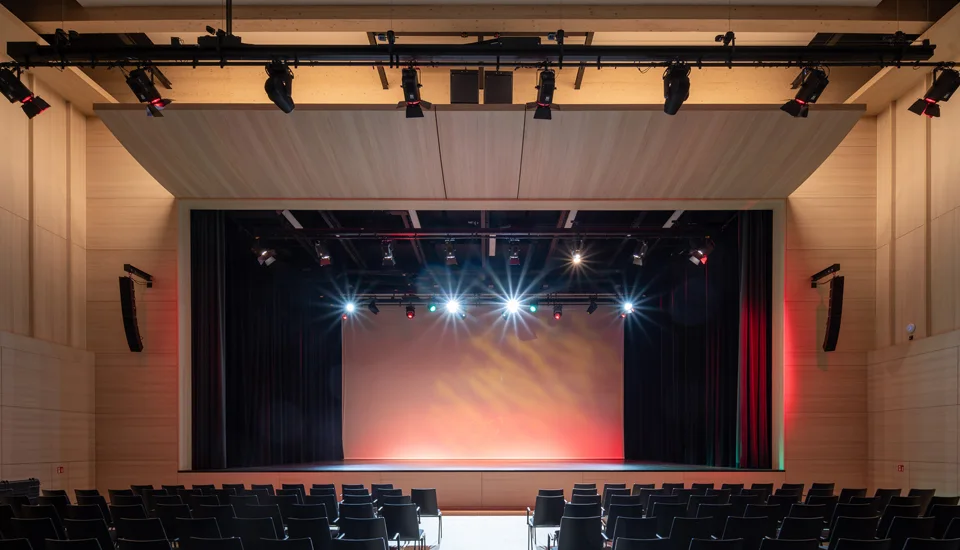
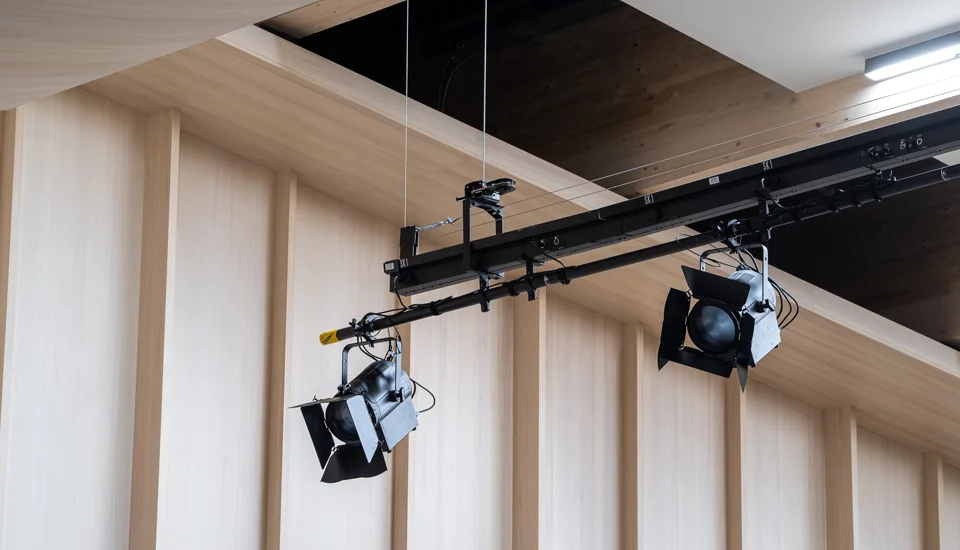
The €20 million FaustForum in Staufen im Breisgau opened in April and hosts two to three events a week. Its stage runs on an ETC Prodigy P2-900 system installed by Scheinwurf GmbH: four motorised hoists, one over the auditorium and three over the stage, with compression tubes, integrated cable management, six power circuits and two DMX universes, flying around 50 fixtures under a clear height of almost seven metres. A three-person team installed and commissioned it in four working days across two visits, including inspection and approval by an independent expert. The hoists run from a QuickTouch+ Mk2 station, with a separate wired remote; ETC says the remote keeps operation within the operator's direct line of sight, while mothergrid's German report says it lets the hoists move outside it. "I can see the current load, the position of each hoist, and save different trim heights," says Simon Weiler, FaustForum's technical manager. "That means positions don't have to be measured again every time."
Saved trims and live load readouts are what make motorised rigging workable in a room shared by the house crew and visiting technicians. Flying is moving down to small multi-use venues, and a three-person install team is the proof.
via ETC ↗
Keith Sonnier — Inside Light, 1968–1970
Installation view, courtesy David Kordansky Gallery 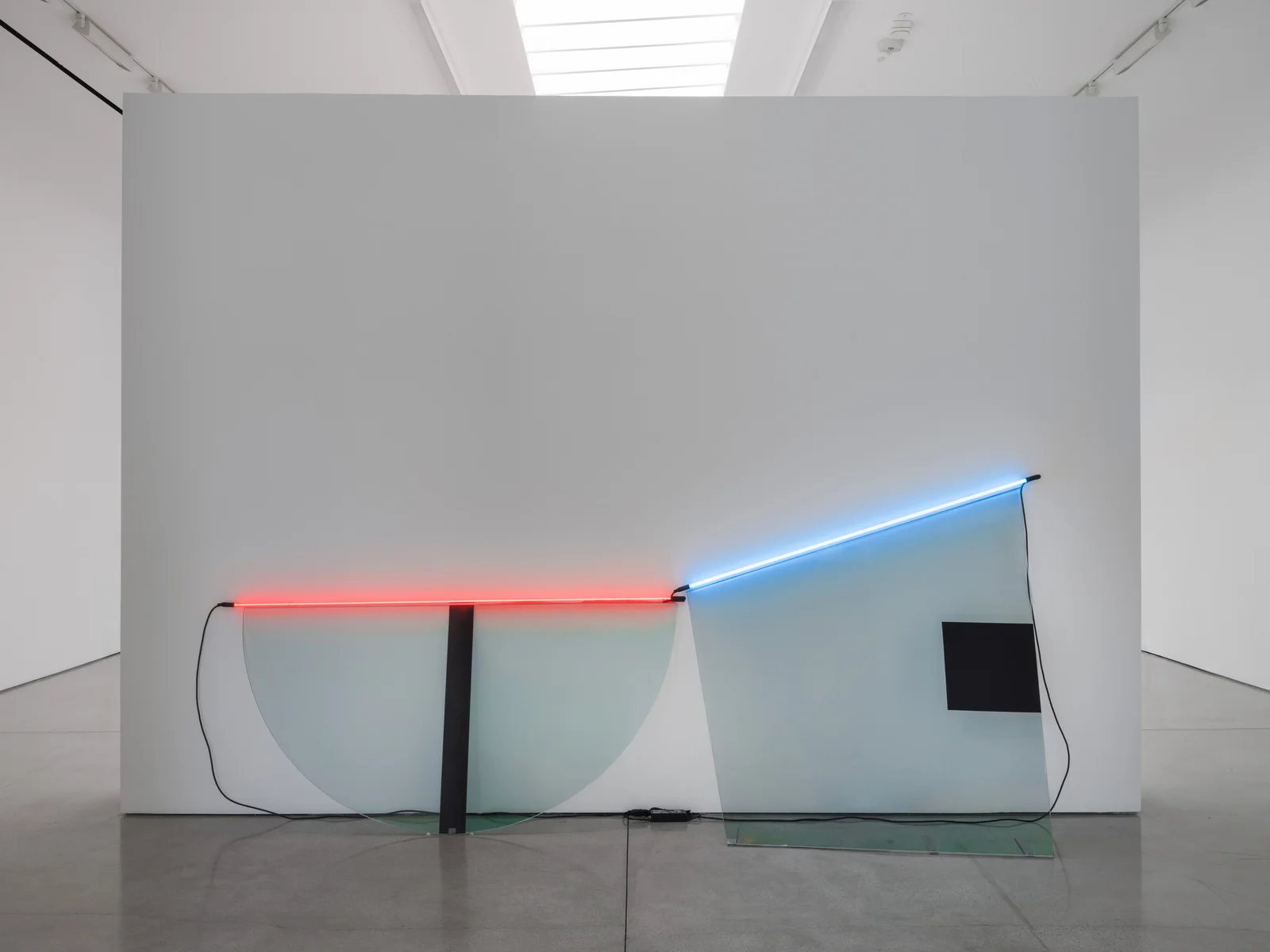
Installation view, courtesy David Kordansky Gallery 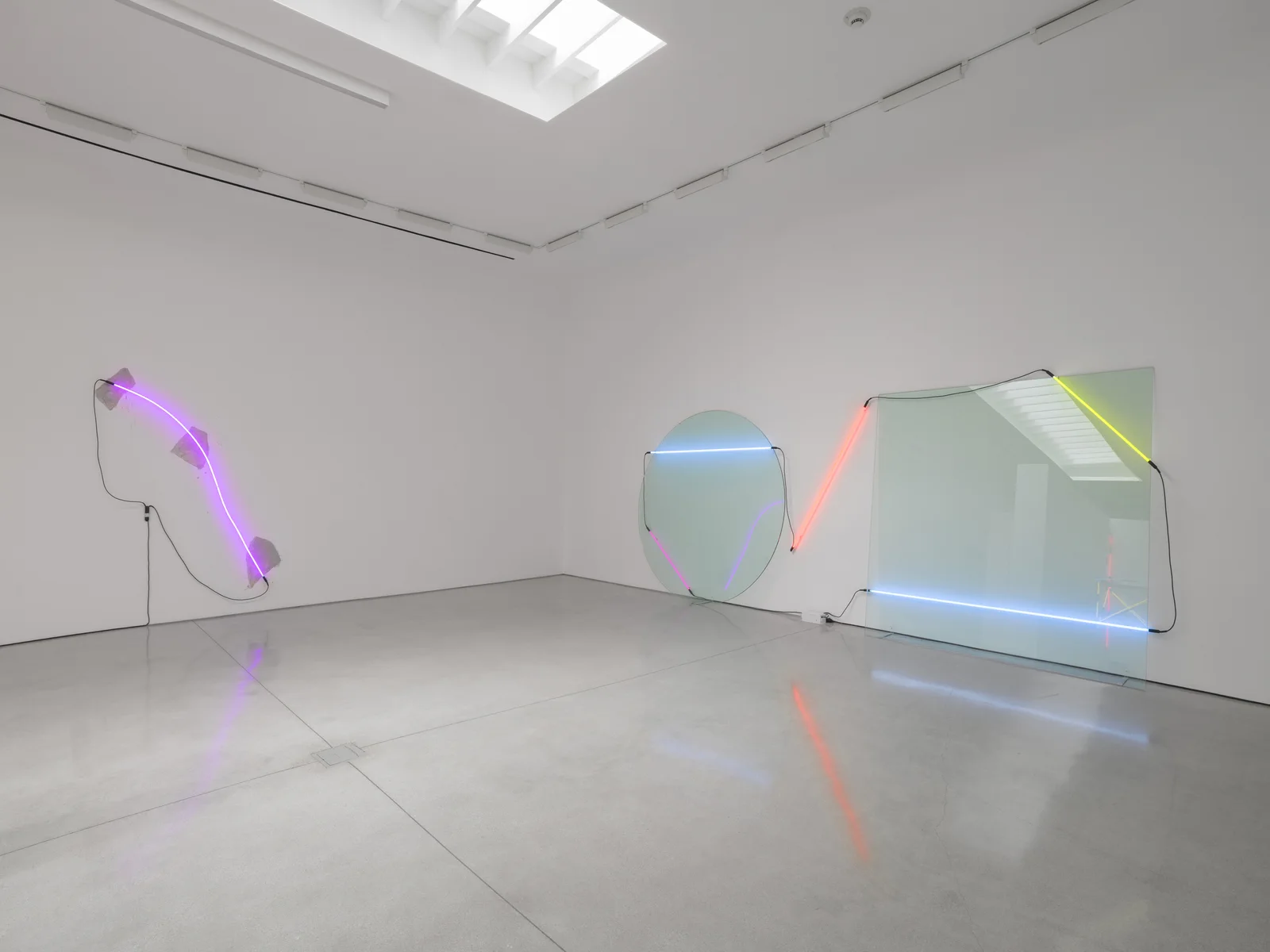
Installation view, courtesy David Kordansky Gallery 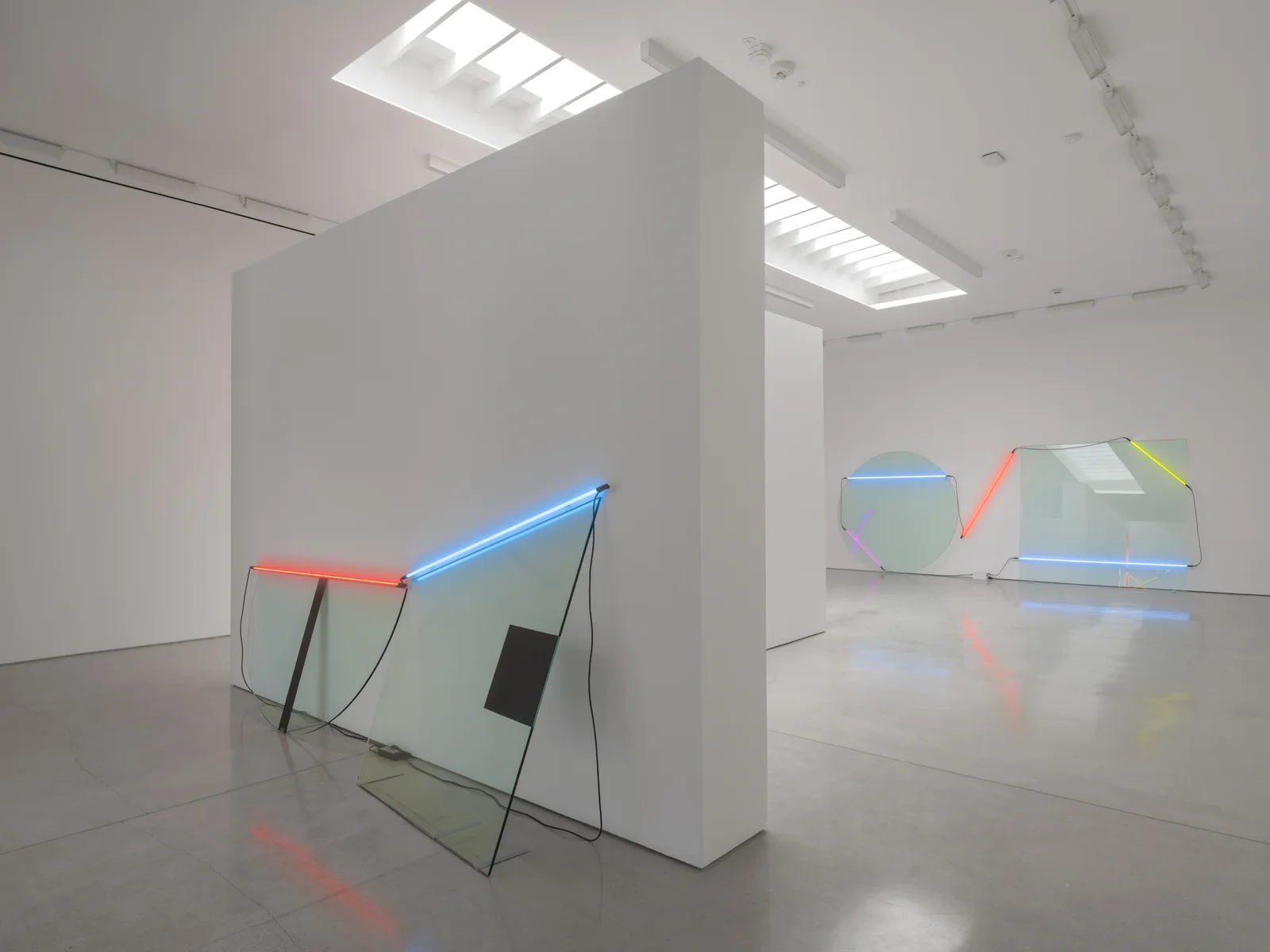
Installation view, courtesy David Kordansky Gallery
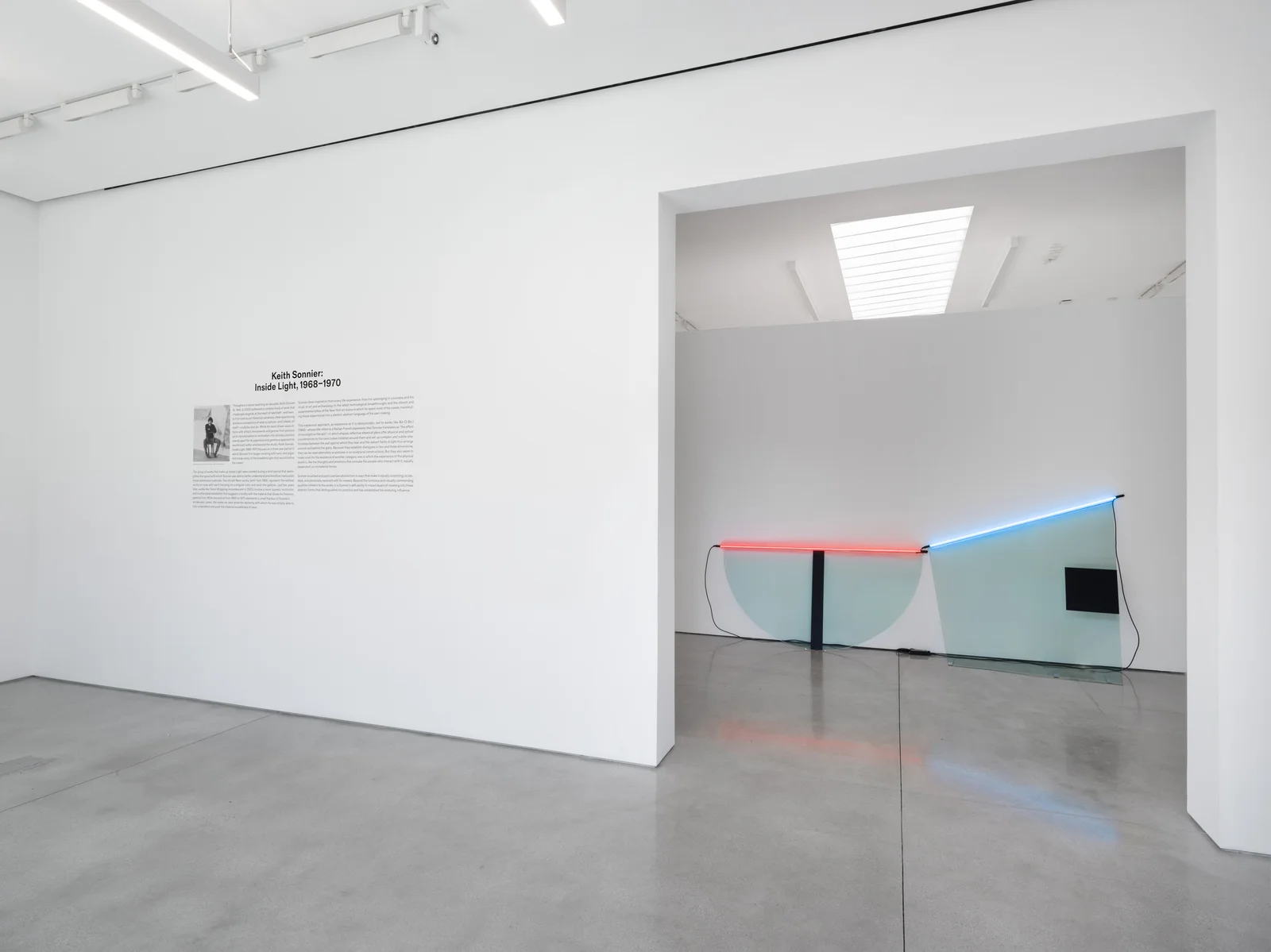
Sonnier's earliest experiments with neon and argon, first shown at David Kordansky's New York gallery in 2024 and now expanded in Los Angeles. Six works, from Arced Neon (Cool White) and Arced Neon (Violet), both 1968, to Neon Wrapping Incandescent V (1970), made of neon, porcelain fixtures, incandescent bulbs and transformer. The gallery places him alongside Eva Hesse, Bruce Nauman, Gordon Matta-Clark and members of the Fluxus group, and describes the works relying on walls, ceilings and floors as a support, the way a painted canvas relies on stretcher bars. David Kordansky Gallery, Los Angeles, through 24 October.
Look at the materials list. The transformer is in it, next to the neon and the porcelain sockets. The gear isn't hidden behind the work; it's part of it. Lighting designers still argue about whether to hide the infrastructure. Sonnier had an answer in 1968.
Ninety Percent of Everything
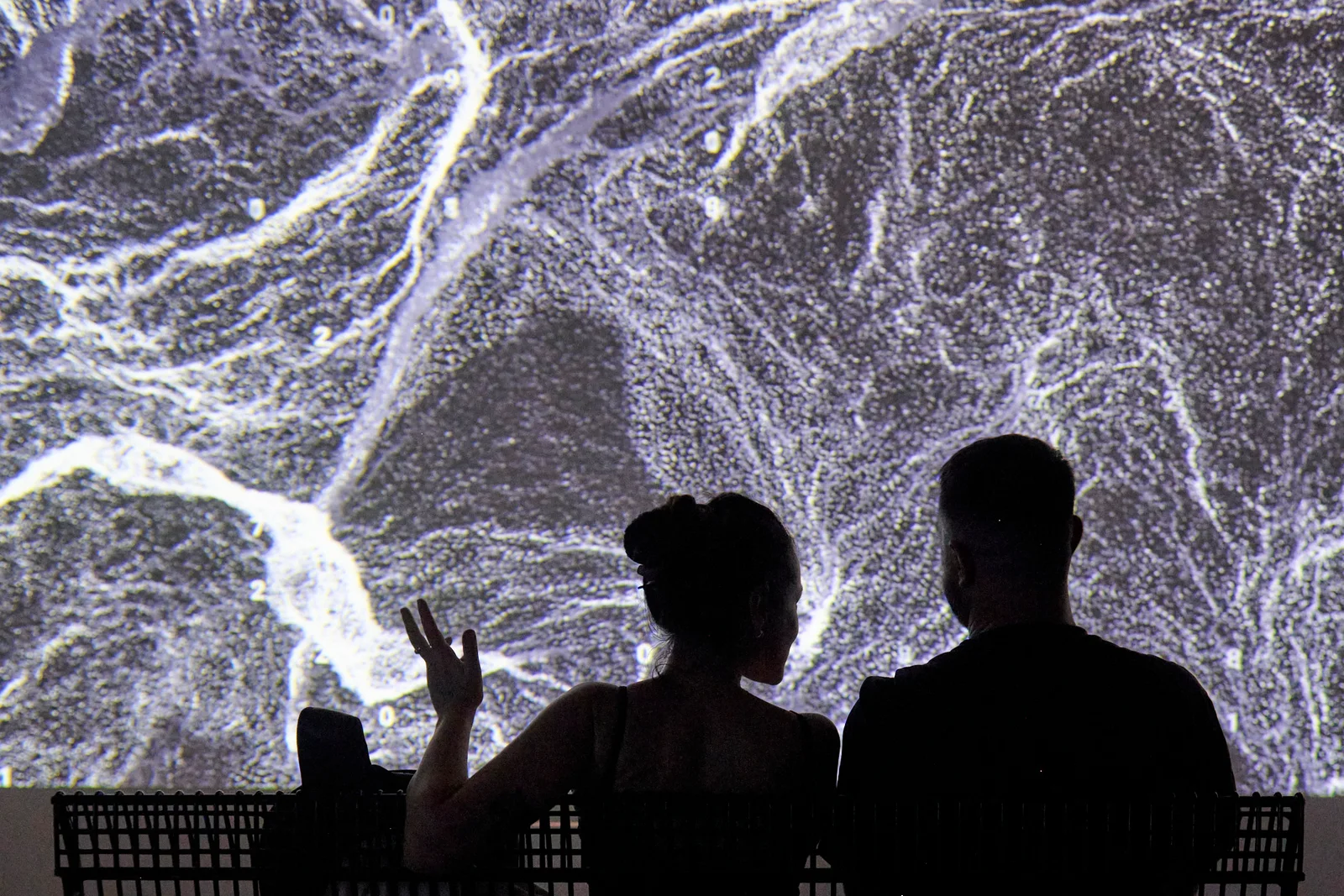
Photo: Simone Lezzi, courtesy Palazzo Ducale Genova 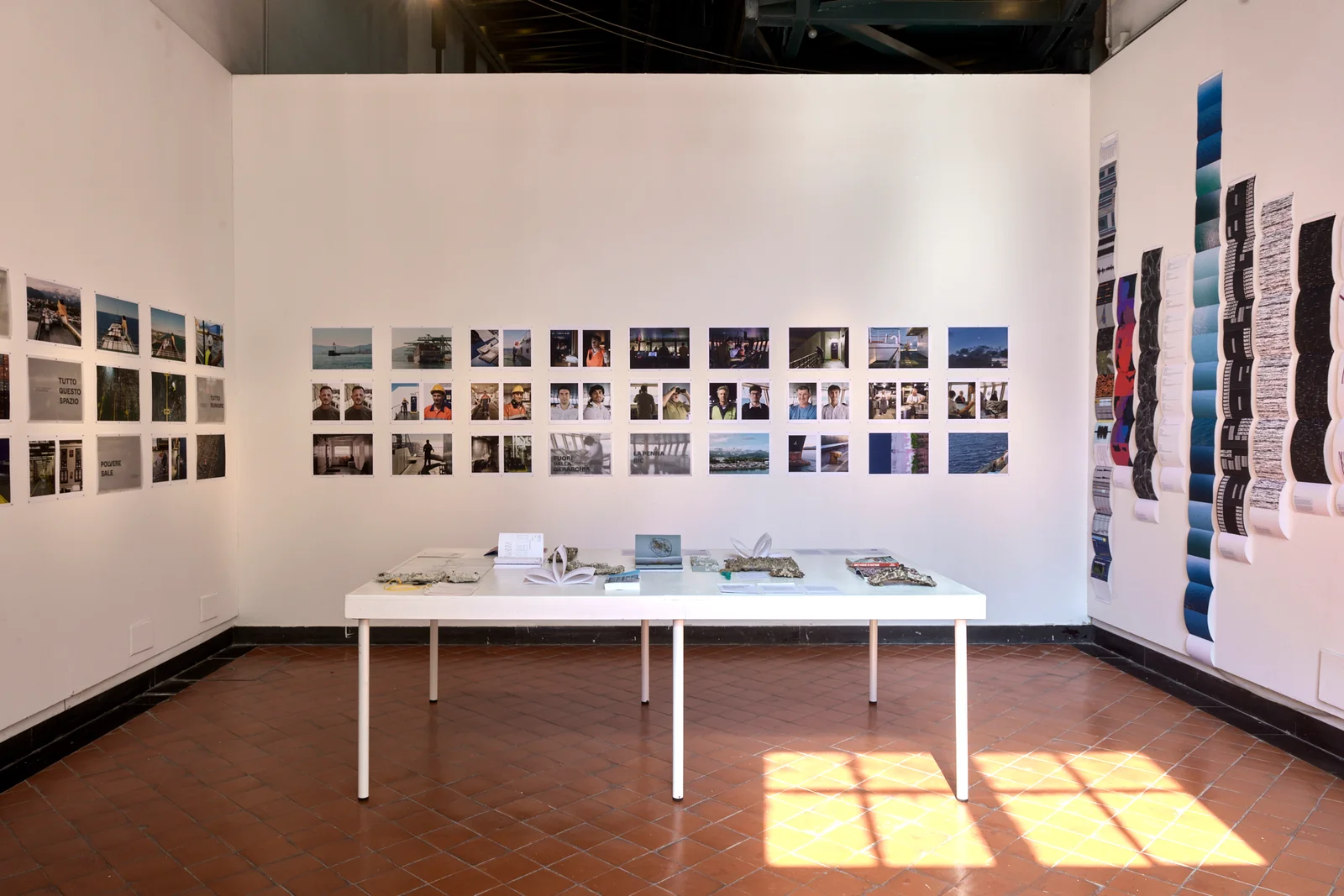
Photo: Simone Lezzi, courtesy Palazzo Ducale Genova 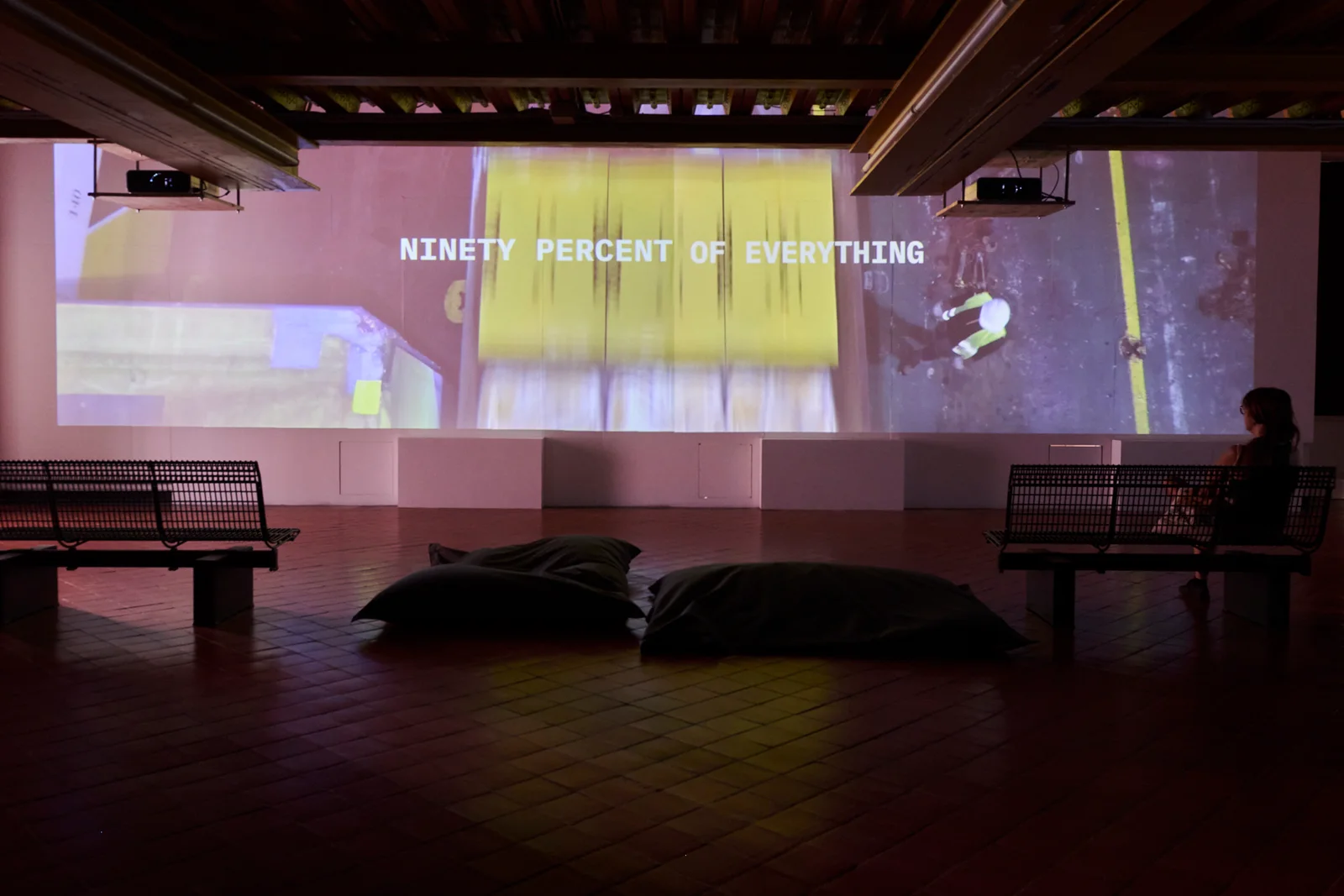
Photo: Simone Lezzi, courtesy Palazzo Ducale Genova
Genoa, Palazzo Ducale, Sala Liguria. 10:00 to 19:00, free. A multichannel installation by Tiziana Alocci, Fish Tank, Fathom 30° and Stellare, a U-BOOT Lab project with Fondazione Palazzo Ducale. Two suspended screens update live: one from an AIS/VHF antenna inside the room, receiving the signals ships broadcast in the port of Genoa, the other from global AIS data on cargo routes. No two visits look the same. The closing talk and performance, Inside Ninety Percent of Everything, is at the Porto di Genova on 4 October at 18:30.
Olafur Eliasson — One-way colour tunnel
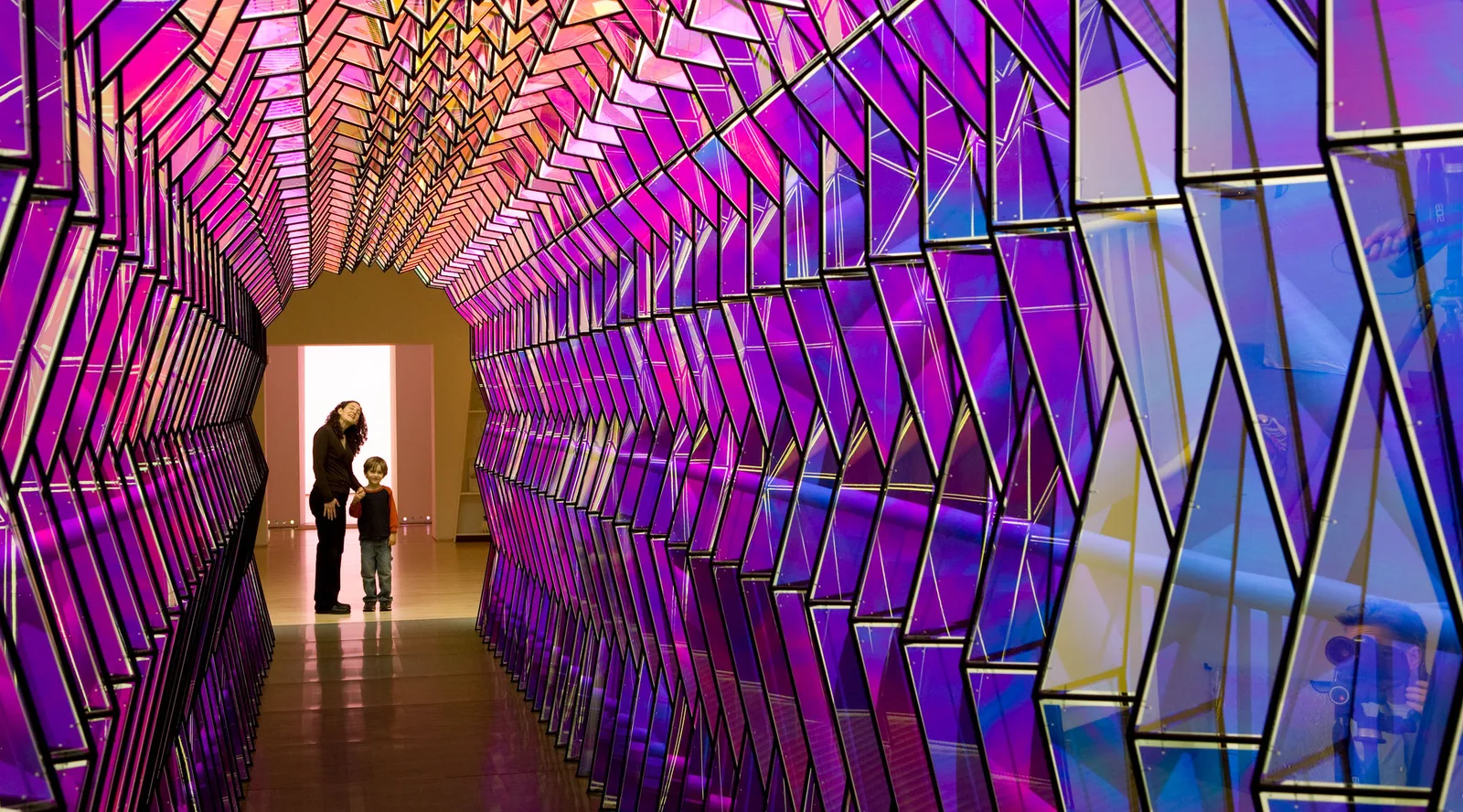
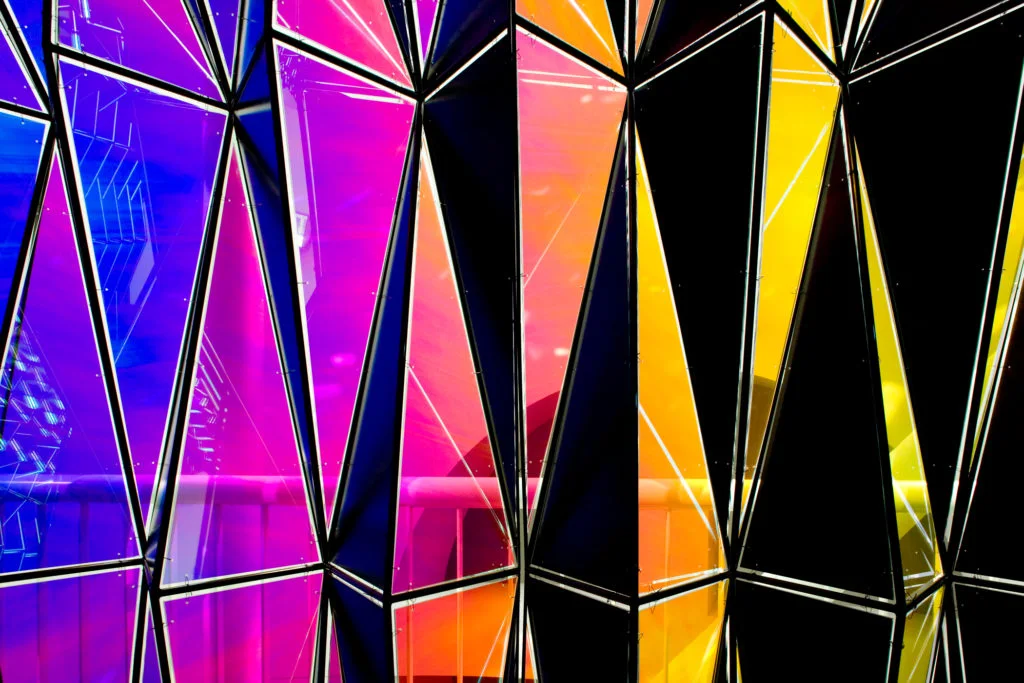
San Francisco, SFMOMA, Floor 5. Closes 4 October after a run that began 1 August 2022. Included with general admission; the museum is closed Wednesdays. Last chance to walk through it.
via SFMOMA ↗
Nam June Paik — The 20th anniversary of his passing
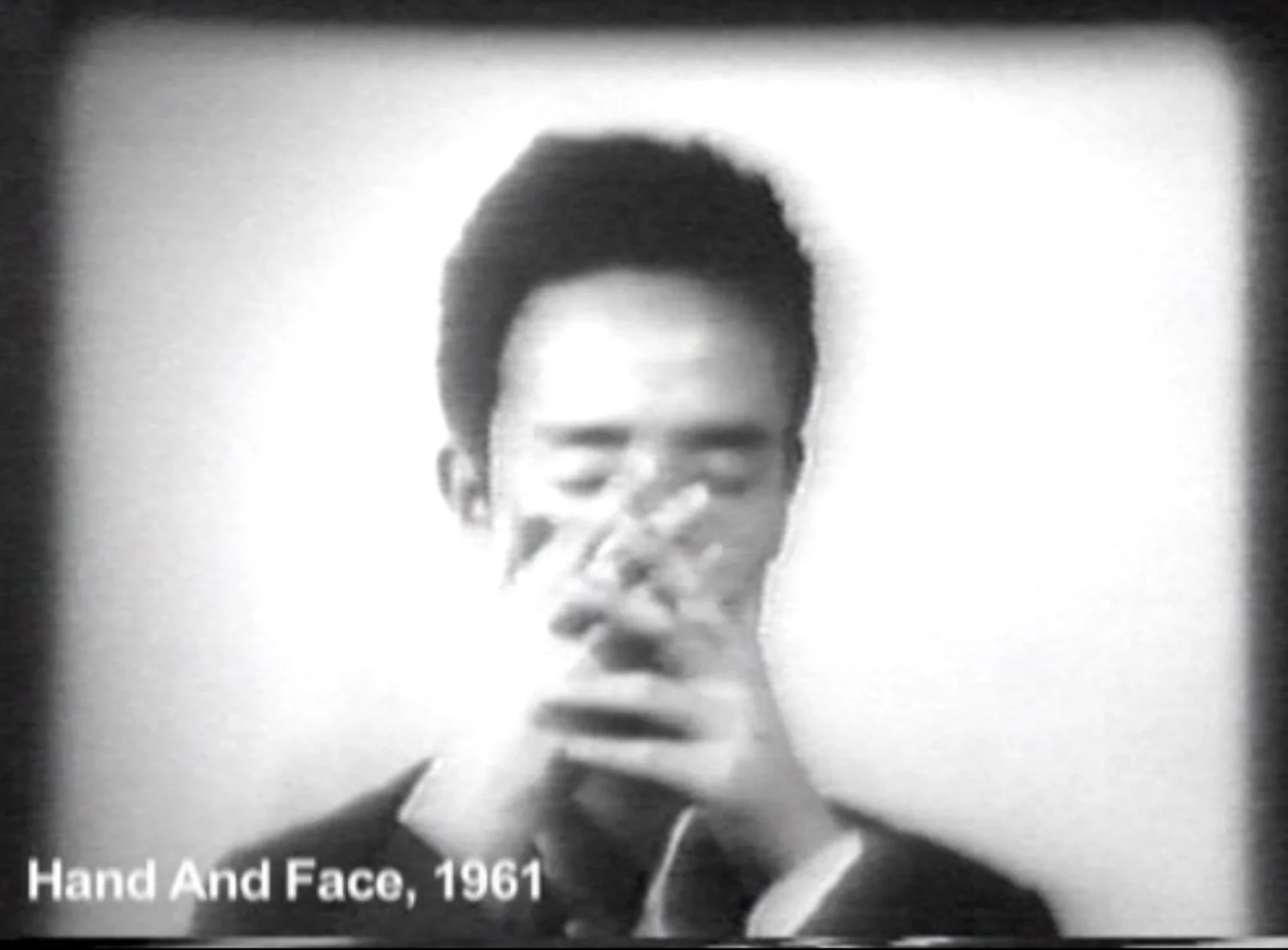
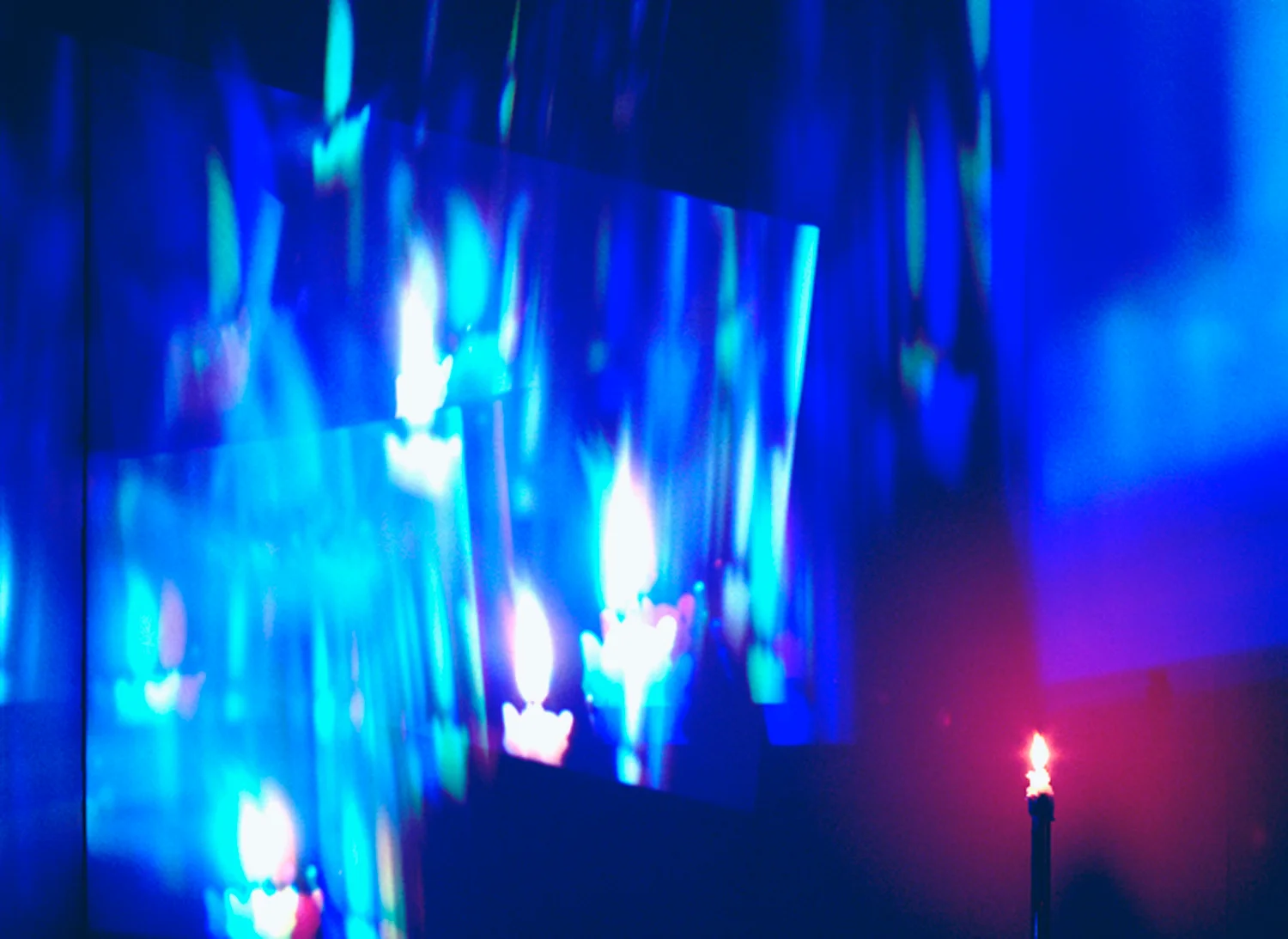
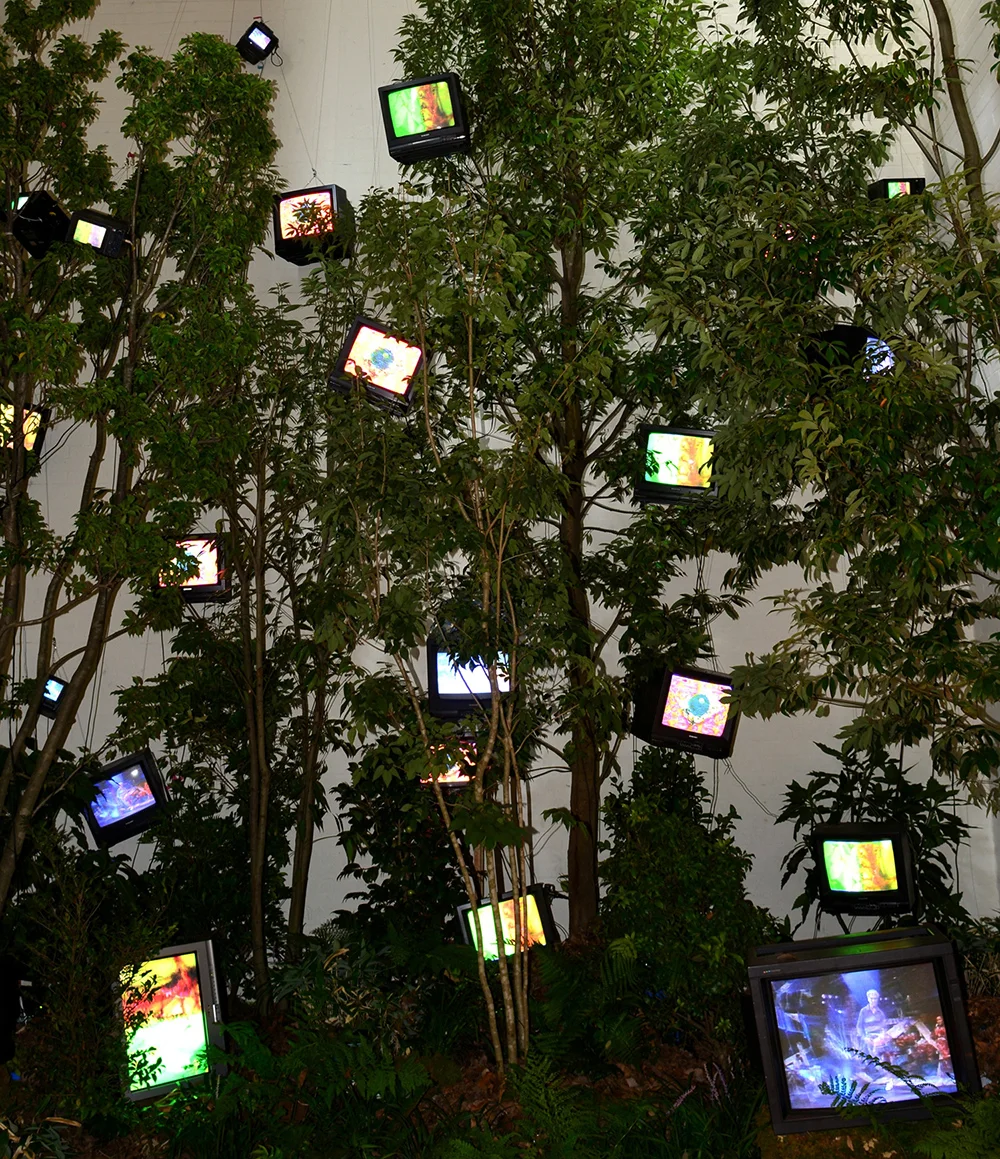
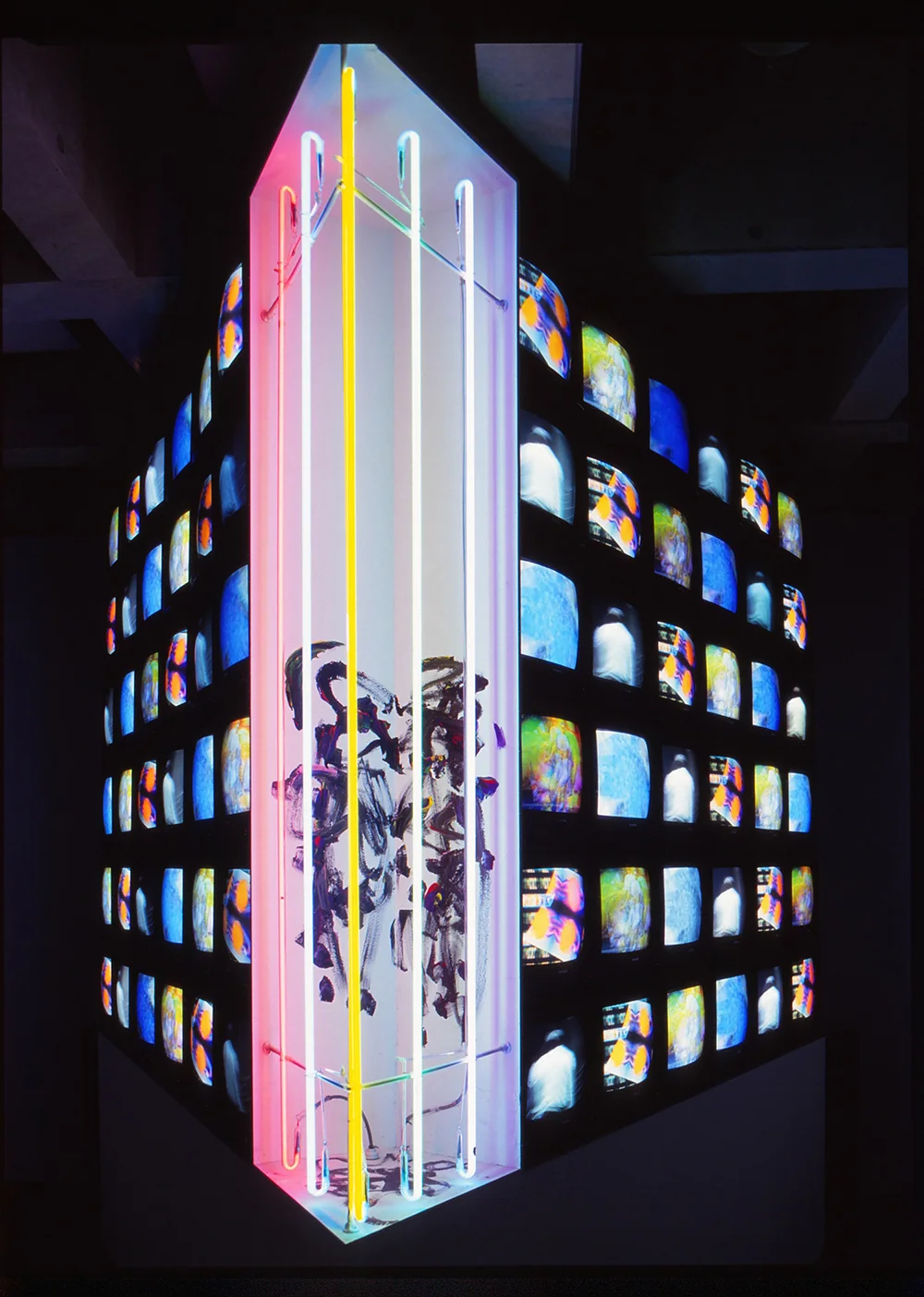
Tokyo, Watari-um. 19 July to 23 November, 11:00 to 19:00, closed Mondays except 12 October and 23 November; adults 1,500 yen. The credits list MeAM Inc. for artwork reactivation and technical cooperation: someone is keeping decades-old video works running, which is its own craft.
via Watari-um ↗
Nuit Blanche Toronto — Tomorrow's Memories
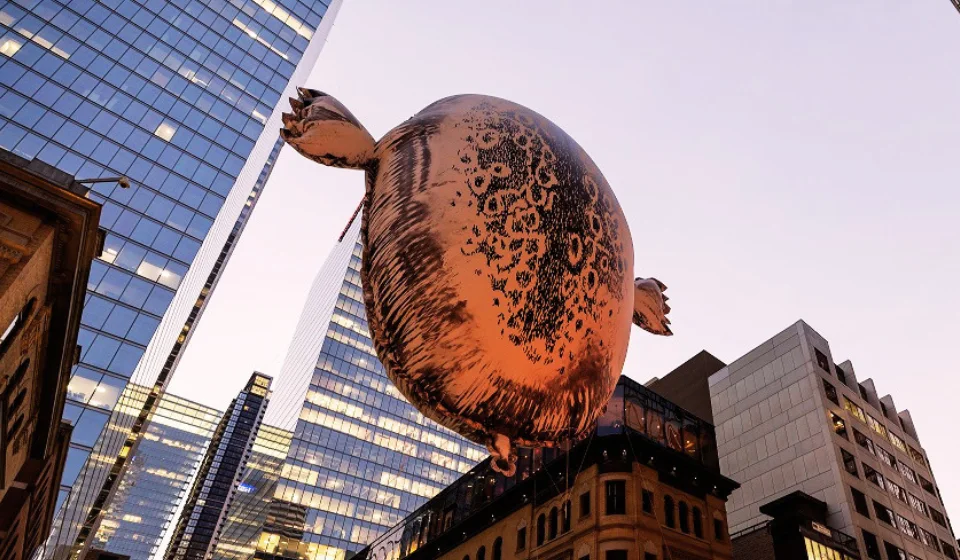
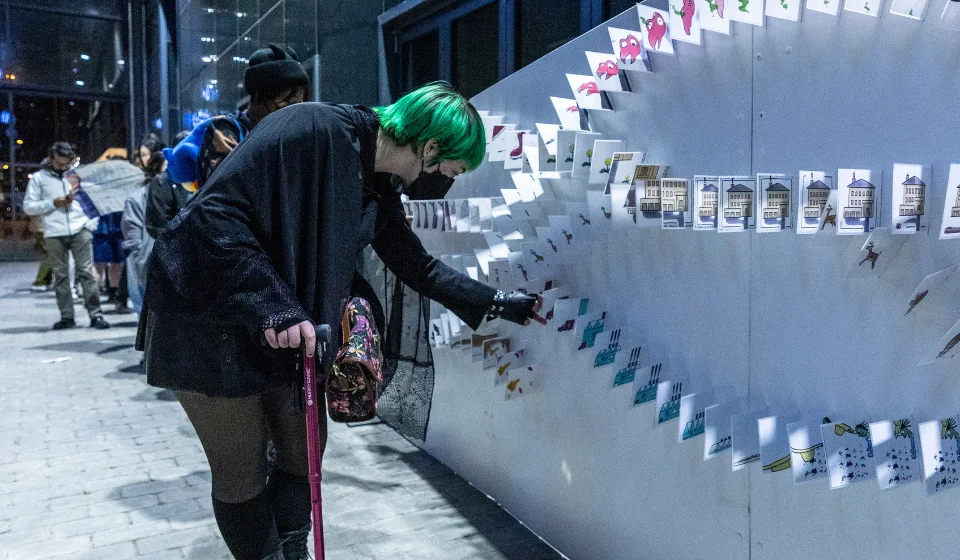
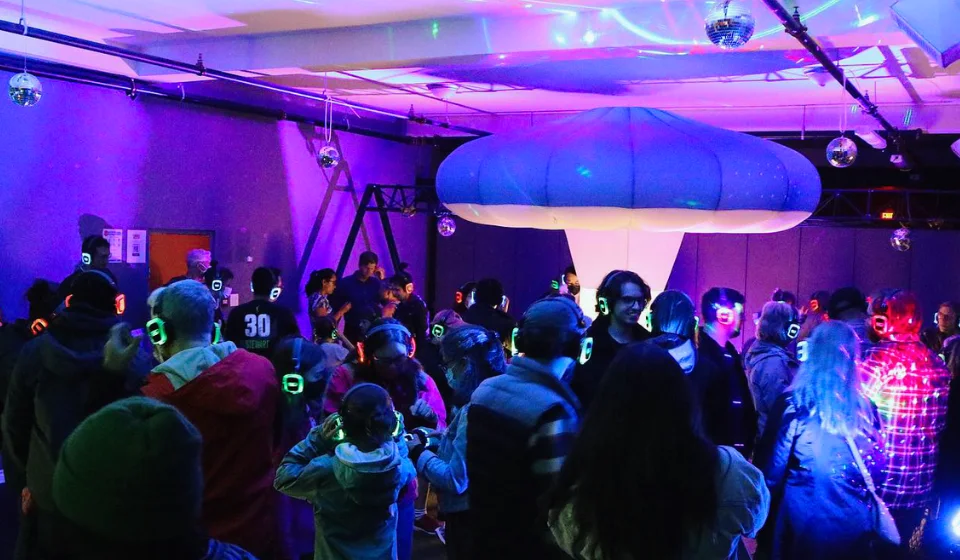
Toronto, 3 October, 7 p.m. to 7 a.m., free, marking twenty years. The City counts almost 1,800 installations by about 6,350 artists since 2006, and over $550 million in economic impact: a strong case that one night of public light and projection art pays its way.
SITE 2026 — the Goat Farm, Atlanta
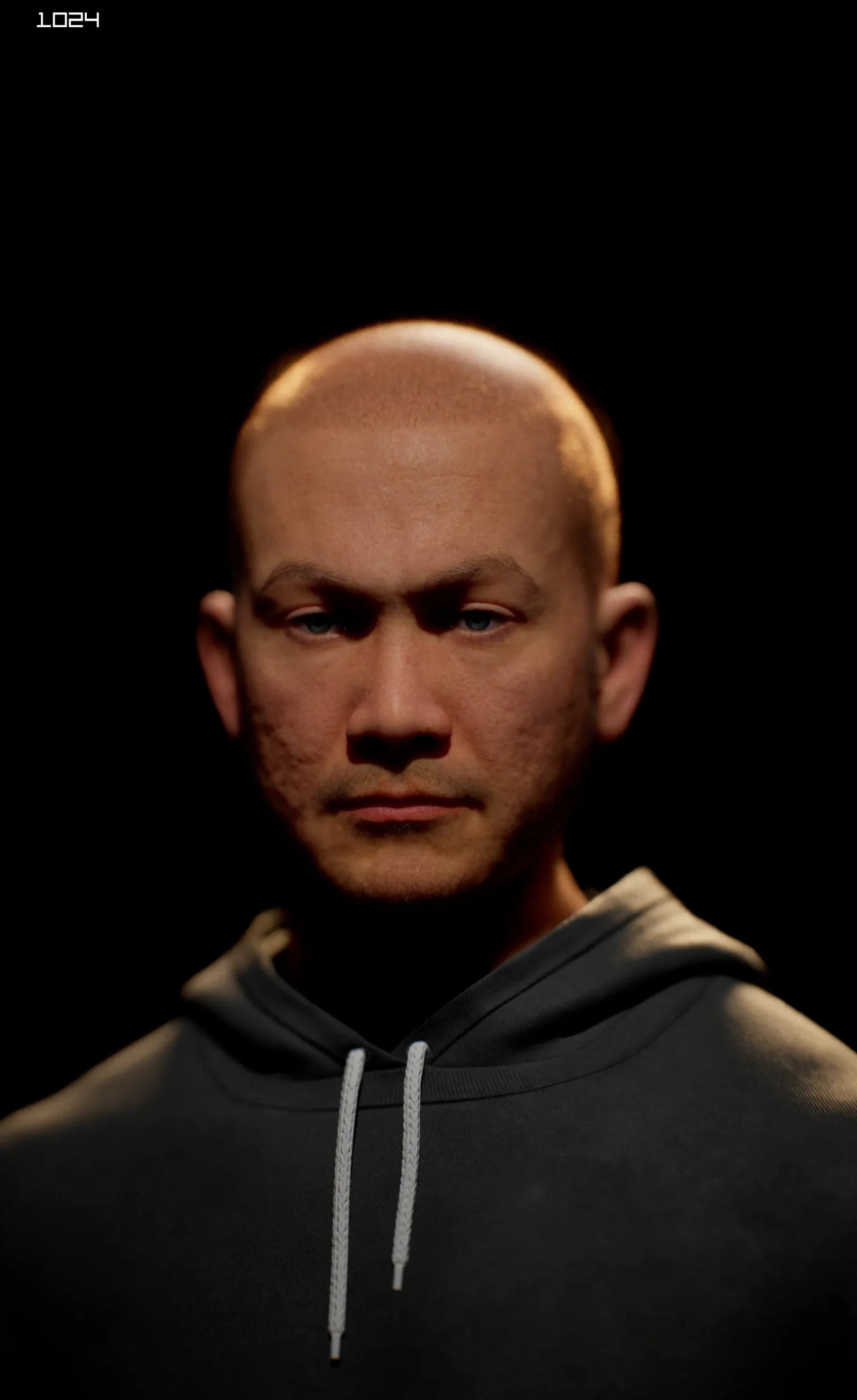
Atlanta, 3 October, 5 to 11 p.m. An experimental art festival at the Goat Farm, with 1024 architecture at the top of the featured artists. Ticketed; kids 12 and under get in free.
via The Goat Farm ↗
Uncloud Festival 2026

Utrecht, 1 to 11 October, the festival's tenth anniversary. Festival weekend 1 to 4 October and the exhibition 2 to 11 October at the Beatrixgebouw (exhibition closed 5 and 6 October); club nights at De Helling on 8 October and EKKO on 11 October.
via Uncloud ↗
Curated by Neves Creative. Every item links to its original source.